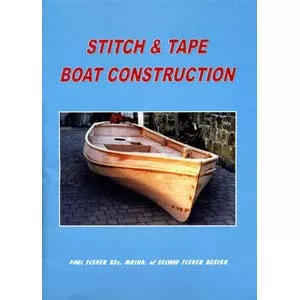
Stitch & Tape Boat Construction
Original price was: $19.20.$11.12Current price is: $11.12.
Description
All the basics of stitch & tape
This new manual incorporates our old “Manual of Modern Small Plywood Boat Construction Techniques” but now also includes several new sections. These include new chapters on fitting buoyancy (flotation), shaping and constructing masts and spars and an extensive chapter on fitting out the hull with decks, centreboards, seating etc.
Many new photographs and illustrations have been added along with up to date details and description of the modern stitch and tape process. This manual is useful for all builders contemplating and building stitch and tape plywood boats up to 18 or 20′ – for plywood boats above this size, see our Manual of Plywood Boat Construction for Larger Craft
Sample Pages
Contents
Chapter 1 Introduction – What is Stitch & Tape Boat Construction?
Chapter 2 Tools, Skills & the Workshop 2.1 Tools 2.2 Skills 2.3 The Workshop
Chapter 3 Material for Stitch & Tape Construction 3.1 Wood 3.1.1 Plywood 3.1.2 Timber (Softwoods) 3.1.3 Timber (Hardwoods) 3.2 Glues & Fastenings 3.3 Developments in Epoxies 3.4 Possible Problems with Epoxies 3.4.1 The Epoxy Will Not Cure 3.4.2 Failure in the Bond of Components being Glued Together 3.4.3 Cloudy Appearance in Epoxy Coatings 3.4.4 Runs in the Epoxy Coating 3.4.5 Other Coating Products will not Cure over Epoxy
Chapter 4 Producing the Hull Planks 4.1 Marking Out the Hull Planks 4.2 Cutting Out the Hull Planks
Chapter 5 Joining Long Planks Together 5.1 General 5.1.1 Butt Straps 5.1.2 Scarf Joining Planks 5.1.3 Saw Tooth or Castellated Join
Chapter 6 Stitching the Planks Together 6.1 Preparing the Planks for Stitching 6.2 Stitching the Planks 6.3 Overcoming Problems with Plywood that will not Bend into Shape 6.4 What to do if a Plank Breaks 6.5 Stitching the Transom in Place 6.6 Final Tightening of the Stitches
Chapter 7 Checking the Shape of the Boat
Chapter 8 Stitch and Tape Seams & Epoxy Filleting Frames etc in Place8.1 General8.2 Stitch & Tape using Polyester Resin8.3 Stitch & Tape using Epoxy Resin8.3.1 For Small boats & Canoes8.3.1.1 Omitting the Tapes on the Outside of the Chine Seams8.3.1.2 Eliminating Tape Bumps on the Outside of the Chine Seam8.3.2 For Larger Boats8.3.3 Combination Seam Joints8.3.4 Bonding Plywood Frames to the Hull8.3.5 General Notes on Epoxy & Bonding with Epoxy
Chapter 9 Fitting Out the Hull 9.1 General 9.2 The Gunwales 9.2.1 The Inwales 9.2.1.1 Simple Solid Inwales 9.2.1.2 Open Pattern Inwales 9.2.2 The Outwales 9.3 Solid Quarter Knees & Breast Hook 9.4 Taking Shapes off the Boat & Fitting Thwarts 9.5 Centreboards & Daggerboards 9.5.1 The Case 9.5.2 The Centre/Daggerboard 9.5.3 Fitting Pivots 9.5.4 Combined Case & Frame 9.6 The Decking 9.6.1 The Deck Structure 9.6.2 The Deck 9.7 Coamings 9.8 Bottom Boards
Chapter 10 Buoyancy (Floatation) 10.1 General 10.2 Type of Buoyancy (Floatation) 10.3 Disposition of Floatation (Buoyancy) 10.4 How Much Buoyancy (Floatation) Do I Need? 10.5 A Note on Self Righting
Chapter 11 Sheathing, Coatings & Finishes 11.1 Sheathing 11.2 Coating with Epoxies 11.3 Paint Finishes on Bare Wood 11.3.1 Preparing the Boat Prior to Painting 11.3.2 Eliminating the Bumps Caused by Tapes on the Outside of the Hull 11.3.3 Striking the Waterline or Boottop 11.4 Safety
Chapter 12 Masts and Spars 12.1 General Notes 12.2 Materials for Wood Masts & Spars 12.3 Solid Masts & Spars 12.4 Hollow Masts & Spars 12.4.1 Round Section Hollow Masts & Spars 12.4.2 Rectangular Section Hollow Masts & Spars
Chapter 13 Appendices 13.1 Skegs & Keels 13.1.1 For Dinghies & Small Dayboats 13.1.2 For Medium Sized Dayboats 14′-18′ 13.1.3 On Larger Dayboats up to 22’13.2 Bilge Keels 13.3 Simple Plywood Rudders 13.4 Notes on Simple Joinery 13.4.1 Marking & Cutting a Simple Joint 13.4.2 Other Useful Joints 13.4.3 The Parts of a Simple Stitch & Tape Boat
Related products
-
Flax Packing 3/16′ X 2′
Original price was: $4.79.$3.24Current price is: $3.24. -
O’Neill Fluid Drysuit
Original price was: $329.97.$171.84Current price is: $171.84. -
O’Brien Men’s Flex V-Back Limited Neo Vest Red -2025
Original price was: $71.99.$44.11Current price is: $44.11. -
Malibu M-Series/LT4 Engine Coolant
Original price was: $39.19.$25.42Current price is: $25.42. -
Malibu Thumb Screw for Under Dash Panel
Original price was: $38.66.$28.47Current price is: $28.47. -
Dutton Lainson B1200A Install Kit for Lift Tech Marine Direct Drive
Original price was: $84.80.$56.05Current price is: $56.05. -
2023 Wakesetter 23 MXZ Softgrip
Original price was: $909.00.$507.65Current price is: $507.65. -
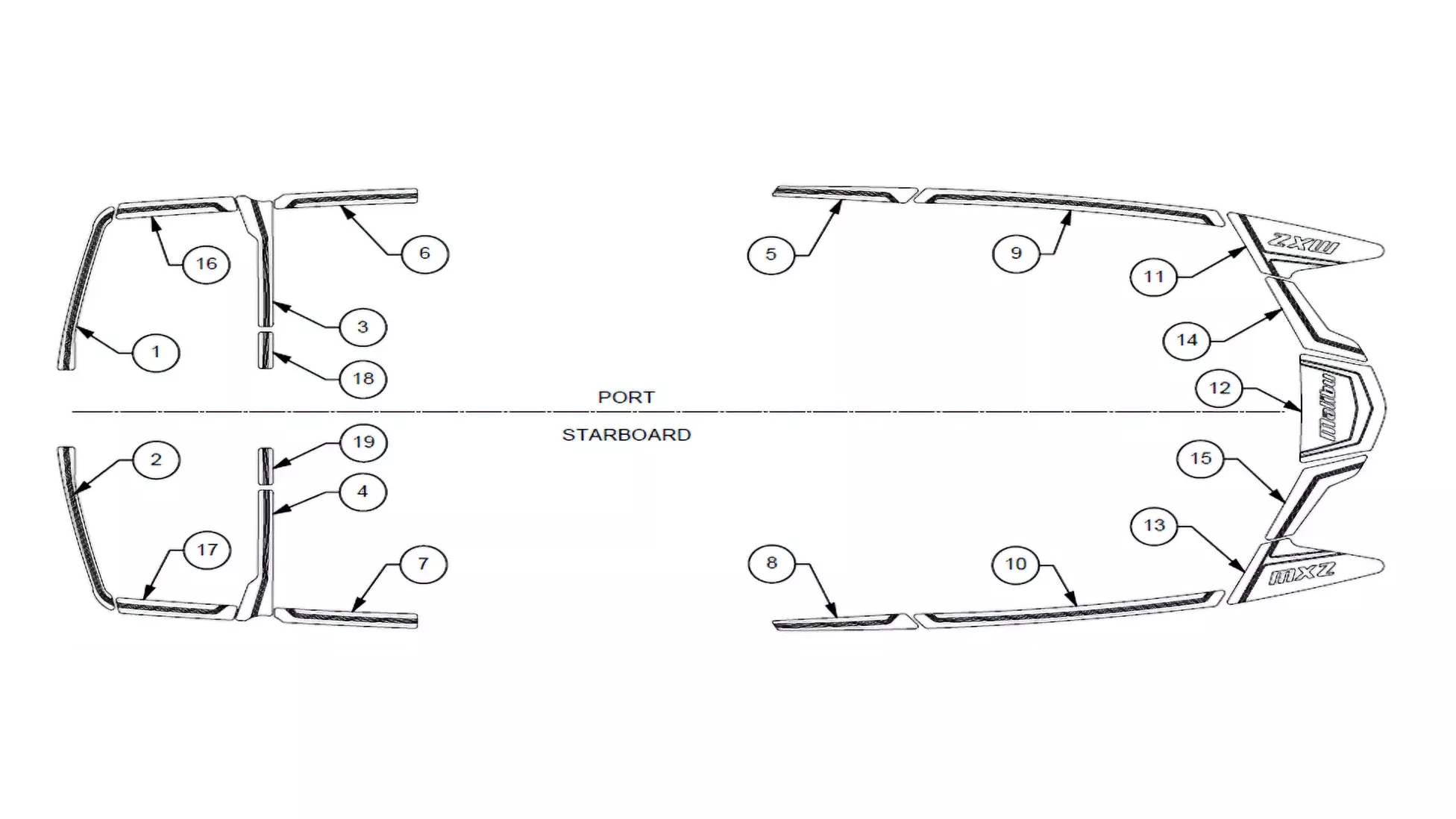
Malibu Floor Covering, Soft Grip Kit, Mocha, 23LSV, S, 18-
Original price was: $893.51.$503.51Current price is: $503.51.